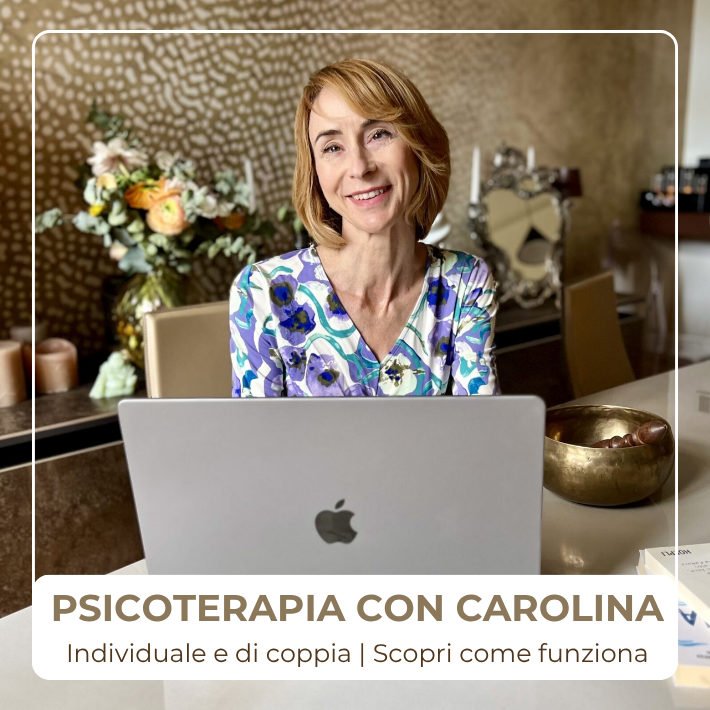
Psicoterapia dell’individuo e della coppia
Non serve toccare il fondo per iniziare una psicoterapia. C’è un’idea piuttosto diffusa secondo cui la terapia sia per chi sta molto male, e che finché si riesce a funzionare si possa rimandare. Non a caso molte persone arrivano da me con una vita che, dall’esterno, sembra reggere piuttosto bene, ma dentro c’è una sofferenza che nessuno vede.
Altre volte, si pensa che per andare in terapia debba accadere un evento drammatico. Eppure, la psicoterapia a volte inizia da un’intuizione improvvisa: ci si accorge di ripetere, si riconosce uno schema. La stessa lite che ricomincia senza mai trovare una soluzione, la stessa sensazione che arriva puntuale dopo qualche mese, le storie che finiscono sempre nello stesso modo, i partner o potenziali tali che hanno tutti qualcosa in comune.
Di fatto, che tu ti senta sull’orlo di una crisi di nervi o protagonista di un film in cui lo stesso copione si è ripetuto troppe volte, se sei qui è probabile che tu ti stia chiedendo se iniziare. Forse, è davvero giunto il momento.
Lavoro come psicoterapeuta da oltre vent’anni, a Milano in via Poerio, a due passi da piazza Risorgimento e online, in italiano e in inglese. Ricevo persone singole e coppie.
Psicoterapia individuale
Le persone arrivano da me quando qualcosa nella loro vita affettiva ha smesso di funzionare e non riescono a capire perché. A volte è la fine di una storia, a volte è una relazione che continua ma è diventata irriconoscibile. Altre volte non c’è nessuna relazione, e proprio questo è il punto: chi si accorge di ritrovare in ogni legame lo stesso copione, chi resta fermo alla porta ogni volta che qualcosa comincia a diventare serio, chi si chiede perché l’amore non arrivi o non duri.
Il percorso individuale parte da lì, dalla domanda che porti, e la prende sul serio. D’altronde, al di là del cliché che lo vuole un argomento leggero, l’amore è una cosa seria.
La nostra vita affettiva è il luogo in cui si decide gran parte della qualità della nostra esistenza, e la ricerca sui legami lo conferma da decenni. C’è una solitudine che fa bene, quella che si sceglie. E ce n’è un’altra che si subisce: la distanza tra i legami che si hanno e quelli che si vorrebbero. È quest’ultima, insieme alle relazioni infelici, a incidere sulla salute quanto il fumo, e più dell’obesità e della sedentarietà. Nessuno dovrebbe dunque sentirsi in imbarazzo per essere in difficoltà sull’amore.
Insieme guardiamo come funzioni nelle relazioni: cosa cerchi, cosa temi, cosa fai quando hai paura, quali storie ti racconti su di te e sugli altri e da quanto tempo le ripeti. Non per giudicarle, ma per vedere se ti servono ancora.
Non tutto quello che si affronta in terapia individuale riguarda l’amore. Ma quasi sempre, prima o poi, ci si arriva.
Psicoterapia di coppia
Nella terapia di coppia il paziente non sei né tu né il tuo partner: è ciò che accade tra voi. E visto che so che è uno dei timori più diffusi, chiariamo subito: non prendo le parti, non stabilisco chi ha ragione, non cerco il colpevole. Il mio compito è rendere di nuovo possibile una conversazione che si è interrotta, spesso da molto prima del giorno in cui vi siete accorti che qualcosa non andava.
Ricevo coppie che attraversano una crisi, un tradimento, una distanza che si allarga, conflitti che si ripetono sempre uguali, differenze nel desiderio, decisioni difficili, compresa la più difficile di tutte: capire se restare insieme. Lavoro anche con coppie che stanno per separarsi e vogliono farlo senza distruggersi, e con chi si sta rimettendo insieme dopo una rottura.
Il mio riferimento principale è il metodo Gottman, che ha il pregio di fondarsi su decenni di ricerca su cosa distingue le coppie che durano da quelle che si logorano, e che lavora su cose molto concrete: come vi parlate, cosa succede quando litigate, come tornate a cercarvi dopo. Accanto a questo, il lavoro di Esther Perel sul desiderio e sull’infedeltà, che aiuta a guardare quello che spesso resta indicibile: la tensione tra il bisogno di sicurezza e il bisogno di libertà, che nessuna coppia risolve una volta per tutte.
Approccio e metodo
La mia formazione è cognitivo-costruttivista, presso il Centro di Terapia Cognitiva di Como. Vuol dire che non parto da un’idea di come si dovrebbe stare al mondo, ma dalla curiosità per come tu costruisci il senso di ciò che ti accade. Guardo le storie che ti racconti su te stesso non come errori da correggere, ma come il modo in cui hai imparato a stare in piedi. Un tempo ti sono servite molto, ora forse queste costruzioni non reggono più, e serve crearne di nuove.
A questo si aggiunge l’attenzione al corpo. Tanto di ciò che riguarda le relazioni non passa dalle parole: passa dalla tensione che arriva prima di una conversazione difficile, dal respiro che si accorcia, da quello che il corpo sa prima di te o rivive sulla base di esperienze che non ha ancora digerito. La pratica della mindfulness, che ho insegnato per anni prima di dedicarmi interamente alla clinica, è entrata nel mio modo di lavorare come strumento per riportare, quando serve, l’attenzione lì. Imparare a sentire, prima ancora di dire o di fare, è il modo migliore per non farsi travolgere.
In studio con me c’è sempre Iago, il mio pastore svizzero, che per molte persone è diventato parte del percorso.
Il primo passo è un incontro conoscitivo, in studio o in videochiamata, per guardare insieme cosa ti porta qui e capire se e come proseguire.
PRENDI APPUNTAMENTO
DOVE
QUANTO COSTA
Individual and Couples Psychotherapy
You don’t have to hit rock bottom to start.
There’s a deeply rooted idea that therapy is only for people who are “really unwell”, that as long as you’re still coping, it can wait. But a lot of the people who walk into my practice have lives that look perfectly fine from the outside. Their pain is real. It just isn’t visible.
There’s a second idea, just as unhelpful: that something dramatic has to happen first.
In fact, therapy often starts with a simple moment of recognition. You catch yourself doing it again. You see the pattern:
- The same argument, week after week, that never gets anywhere.
- The same heavy feeling that shows up three months in, right on cue.
- Relationships that end the same way every time, with partners who somehow all have something in common.
Whether you feel close to falling apart or simply tired of playing a script you’ve memorized too well, if you’re reading this, you’re probably wondering whether to begin.
It may well be time.
About me
I’ve worked as psychotherapist for over twenty years. I work in Milan and online, in English and Italian, with both individuals and couples.
My background is multicultural: I was born in Ivory Coast to a Belgian mother and an Italian father, and lived in several countries before settling here. Many of the people I see in English live in Milan without being from Milan, and want to do this deeply personal work in their own language.
I know exactly what that’s like from the inside.
Individual therapy
People come to me when something in their emotional life has stopped working and they don’t know what to do with it.
Sometimes a relationship has ended. Sometimes it hasn’t, but it has become unrecognizable. And sometimes there is no relationship at all, which is exactly the problem. You might find the same script turning up in every connection, a sudden stall whenever things start to matter, or the constant question of why love doesn’t come, or doesn’t last.
That is where we start: with the question you bring. Whatever the clichés say, love is serious.
The Cost of Disconnection
So much of how a life feels comes down to who we love, and how. Decades of research tell us the same thing. Some solitude is good for us: the kind we choose. Another kind isn’t: the gap between the closeness we have and the closeness we want.
That gap, much like an unhappy relationship, damages our health as much as smoking does, and more than being overweight or inactive. There is absolutely nothing embarrassing about struggling with this.
What We Look At Together
In our sessions, we look closely at how you move through relationships:
- What you go looking for, and what frightens you.
- What you do when you are frightened.
- The stories you’ve told yourself about who you are and what other people are like, and how long you’ve been telling them.
The goal isn’t to prove your past coping mechanisms wrong. It is simply to ask: Does this script still serve you?
Not all of therapy is about love. But sooner or later, we usually get there.
Couples therapy
In couples therapy, you are not my patient, and neither is your partner. My patient is what happens between you.
Because this is what most people are quietly worried about, let me be clear from the start: I do not take sides, I do not rule on who is right, and I am not looking for someone to blame. My job is simply to get the conversation going agai, the one that broke down long before you noticed anything was wrong.
The Dynamics I Work With
I work with couples at every stage of their relationship, including those navigating:
- Crises and conflict: Dealing with an affair, a distance that keeps growing, or the same fight playing out on a loop.
- Intimacy issues: Couples who want different things in bed or feel disconnected.
- Hard transitions: Facing a difficult decision, including the hardest one of al, whether to stay together.
- Separation and rebuilding: Couples who are separating and want to do it without wrecking each other, as well as those putting things back together after a break.
My Approach: Research Meet Real Life
My practice is grounded in two primary frameworks:
- The Gottman Method: The strength of this approach is that it rests on decades of research into what separates couples who last from couples who wear each other down. It deals in practical specifics: how you speak to each other, what happens when you fight, and how you find your way back afterward.
- The Work of Esther Perel: I draw on her insights regarding desire and infidelity. This helps us open up what usually goes unsaid—the ongoing pull between the human need to feel safe and the desire to feel free. No couple settles that conflict for good.
How I Work
I trained in the cognitive-constructivist approach at the Centro di Terapia Cognitiva in Como. That means I don’t start from a view of how a person ought to live. Instead, I start from being curious about how you make sense of what happens to you.
The stories you tell about yourself aren’t mistakes waiting to be corrected: they are how you learned to stay standing. They worked, once. But perhaps they don’t hold anymore, and it is time to build new ones.
The Role of the Body
I pay attention to the body, too. Most of what goes on in a relationship never makes it into words. It is in the tightening before a difficult conversation, the breath going shallow, or the things your body knows before you do, perhaps replaying something it hasn’t finished digesting.
I taught mindfulness for years alongside my clinical work, and it stayed with me as a way of bringing attention back to the physical self when it is needed. Learning to feel a sensation before you say it or act on it is the best protection there is against being swept away.
My Co-Therapist
Iago, my white Swiss shepherd, is always in the room. For a lot of people, he has become an integral part of the work.
The First Step
The first step is an introductory session, in person or via video. This gives us a chance to explore your needs and work out together whether to go ahead, and how.